Philanthropic Planning at Petrichor Wealth Management
Charitable giving strategies including donor-advised funds, charitable trusts, and planned giving to maximize impact while optimizing tax benefits. · Charlottesville, VA
Published in partnership with Petrichor Wealth Management · ← All Petrichor Wealth Management services
Book online anytime
Petrichor Wealth Management's philanthropic planning services are led by CERTIFIED FINANCIAL PLANNER™ professionals who specialize in structuring charitable giving strategies that align with your values while optimizing tax benefits. We design customized solutions including donor-advised funds, charitable remainder trusts, qualified charitable distributions, and planned giving vehicles, integrating them seamlessly with your overall wealth management plan. Our advisors work directly with your tax professionals and estate attorneys to ensure your charitable legacy reflects your values while maximizing the financial efficiency of every gift through strategic asset selection, timing, and structuring.
Session options and pricing
| Session | Price | Description |
|---|---|---|
| Included in Wealth Management | Included for clients with $1M+ assets | Philanthropic planning integrated with comprehensive wealth management services, including strategy development, vehicle selection, tax coordination, and implementation support |
| Standalone Planning Engagement | $5,000 - $15,000 | Project-based philanthropic planning for clients seeking charitable giving strategy without full wealth management relationship, based on complexity and coordination needs |
| Complex Trust Structures | Custom pricing | Coordinated planning for charitable remainder trusts, charitable lead trusts, and private foundations requiring extensive legal and tax coordination |
Understanding Strategic Philanthropic Planning
Philanthropic planning goes far beyond writing checks to charity—it's the strategic design of charitable giving to maximize both social impact and financial benefits. Effective philanthropic planning integrates charitable goals with overall wealth management, estate planning, and tax strategy to create sustainable giving programs that reflect your values while optimizing financial efficiency. The field encompasses donor-advised funds, charitable trusts, private foundations, planned giving techniques, and strategic asset selection.
The financial benefits of strategic philanthropy can be substantial. Properly structured charitable giving can reduce income taxes through deductions, eliminate capital gains taxes on appreciated assets, lower estate taxes by removing assets from taxable estates, and reduce Medicare premiums and Social Security taxation by managing adjusted gross income. Many high-net-worth individuals find they can support charitable causes at higher levels than expected once they understand the tax leverage available through advanced planning techniques.
Beyond tax benefits, sophisticated philanthropic planning creates lasting family legacies, engages multiple generations in shared values, provides opportunities for meaningful social impact, and often generates deeper personal satisfaction than purely accumulation-focused wealth strategies. The most effective plans align financial structures with personal values and family mission to create authentic, sustainable charitable engagement.
Donor-Advised Funds: The Swiss Army Knife of Charitable Giving
Donor-advised funds (DAFs) have become the fastest-growing charitable giving vehicle in America, with over $230 billion in assets as of 2023. A DAF functions like a charitable investment account—you contribute cash, securities, or other assets, receive an immediate tax deduction for the full fair market value, the assets are invested for tax-free growth, and you recommend grants to qualified charities over time. Sponsoring organizations (such as Fidelity Charitable, Schwab Charitable, or community foundations) handle all administrative tasks, tax compliance, and due diligence on recipient charities.
The advantages of DAFs include immediate tax deductions with flexible grant timing (allowing you to 'bunch' deductions in high-income years), simplified record-keeping and administration, the ability to donate complex assets like private business interests or real estate, anonymity options for grants, low costs (typically 0.6-1% annually), and the ability to involve family members as successor advisors. DAFs have become particularly valuable after tax reform increased standard deductions—many donors now contribute 2-3 years of charitable gifts to a DAF in one year to exceed the standard deduction, then grant from the fund over subsequent years.
DAFs work exceptionally well for donating appreciated stock, cryptocurrency, or other appreciated assets. The donor receives a deduction for the full fair market value while avoiding capital gains tax on the appreciation. For high-income professionals, business owners planning exits, or anyone with concentrated stock positions, DAFs provide a flexible, low-cost structure to maximize charitable impact and tax efficiency without the complexity of a private foundation.
Charitable Trusts: Converting Appreciated Assets to Income and Legacy
Charitable remainder trusts (CRTs) and charitable lead trusts (CLTs) are sophisticated split-interest vehicles that provide benefits to both charitable and non-charitable beneficiaries over time. A charitable remainder trust pays income to you or other beneficiaries for life or a term of years, then distributes the remainder to charity. When you fund a CRT with appreciated assets, the trust sells them tax-free, reinvests in a diversified income-producing portfolio, and pays you a percentage annually—effectively converting a low-yield appreciated asset into retirement income while avoiding capital gains tax and receiving a partial charitable deduction.
CRTs come in two varieties: charitable remainder annuity trusts (CRATs) that pay a fixed dollar amount annually, and charitable remainder unitrusts (CRUTs) that pay a fixed percentage of trust assets valued annually. CRUTs are more flexible and popular, typically paying 5-7% annually and allowing additional contributions over time. The economic benefit can be significant—for example, a 65-year-old with $1 million of stock purchased for $200,000 could face $190,000 in capital gains tax if sold directly (at 23.8% rates), leaving only $810,000 to invest. A CRUT avoids this tax, invests the full $1 million, and might pay $50,000-$70,000 annually for life while providing a current charitable deduction of $300,000-$500,000 (depending on payout rate and life expectancy).
Charitable lead trusts work in reverse—they pay income to charity for a term of years, then distribute the remainder to family members. CLTs are powerful estate freeze techniques for high-net-worth families, allowing you to transfer appreciating assets to heirs at reduced gift tax cost while supporting charity during the trust term. While more complex than CRTs, CLTs can be particularly valuable during low interest rate environments or when transferring high-growth assets to the next generation. Both CRT and CLT structures require experienced legal counsel to draft and ongoing administration, making them most appropriate for clients with $500,000+ to contribute.
Tax-Smart Asset Selection and Timing Strategies
Which assets you donate and when you donate them can dramatically impact the effectiveness of charitable giving. The most tax-efficient charitable contributions are highly appreciated, long-term capital gain assets—particularly publicly traded securities, qualified small business stock, or real estate. Donating these assets directly to charity (or to a DAF or CRT) allows you to deduct the full fair market value while permanently avoiding capital gains tax on the appreciation. This effectively increases your charitable impact by 15-30% compared to selling assets, paying tax, and donating cash.
Timing strategies can amplify benefits further. 'Bunching' contributions—donating multiple years of planned giving in a single high-income year—allows you to exceed the standard deduction and itemize, then take the standard deduction in subsequent years. This is particularly valuable for business owners with variable income, professionals expecting bonuses, or anyone experiencing one-time income events. Qualified charitable distributions (QCDs) from IRAs for donors 70½+ provide tax-free transfers that count toward RMDs without increasing adjusted gross income—often more valuable than traditional deductible contributions for retirees.
Asset location also matters. Donating appreciated assets from taxable accounts maximizes tax benefits, while retirement account assets are better left to charity through beneficiary designations (since charities don't pay income tax on inherited IRAs, while individual heirs do). For donors with both highly appreciated assets and traditional IRAs, the optimal strategy often involves donating appreciated securities during life and directing tax-deferred retirement assets to charity at death through beneficiary designations, leaving more tax-efficient assets to heirs. Strategic philanthropic planning analyzes your complete asset picture to identify the highest-impact giving opportunities.
What's Included
Values Discovery and Goal Setting: In-depth conversations to understand your charitable passions, family values, and philanthropic objectives, creating a giving mission that guides strategy development
Tax-Optimized Giving Analysis: Comprehensive modeling of different giving vehicles and strategies showing projected tax savings, optimal asset selection, and timing recommendations customized to your situation
Charitable Vehicle Selection and Setup: Evaluation and implementation of appropriate structures (donor-advised funds, charitable trusts, foundation options) with coordination of custodians, attorneys, and tax advisors
Integration with Wealth and Estate Plans: Seamless coordination of philanthropic strategy with investment management, retirement planning, estate planning, and tax planning to create a unified wealth management approach
Ongoing Grant Strategy and Family Engagement: Support for grant-making decisions, involvement of family members in philanthropy, impact measurement, and strategy adjustments as goals and circumstances evolve
Bottom line: Research demonstrates that strategic philanthropic planning increases both total charitable giving and donor satisfaction while providing significant tax benefits, with donor-advised funds growing from $70 billion in 2014 to over $230 billion in 2023 due to their flexibility and efficiency. Studies show donors who engage in formal philanthropic planning give 3-5 times more over their lifetimes than those making ad hoc gifts.
National Philanthropic Trust annual DAF Report, Giving USA research, IRS Publication 526 (Charitable Contributions) and Publication 561 (Asset Valuation), American Council on Gift Annuities standards, research from Indiana University Lilly Family School of Philanthropy on planned giving effectiveness and donor motivation.
Who Is Philanthropic Planning Good For?
Good candidates: Philanthropic planning is ideal for individuals or families making regular charitable contributions of $10,000+ annually who want to maximize tax efficiency and impact, those with highly appreciated assets (stock, real estate, business interests) seeking to donate while avoiding capital gains tax, business owners planning exits who want to convert proceeds into charitable legacy, high-net-worth families seeking to reduce estate taxes while creating lasting philanthropic impact, and anyone wanting to involve family members in shared charitable values. It's particularly valuable for clients in high tax brackets, those experiencing one-time income events, retirees taking required minimum distributions, and individuals with complex estates seeking to balance family and charitable beneficiaries.
Who should consult a doctor first: Clients should consult with tax advisors before implementing charitable trust structures or making large contributions of complex assets (closely-held business interests, real estate, partnership interests) to ensure proper valuation and tax treatment. Individuals considering charitable remainder trusts should discuss with estate planning attorneys to ensure coordination with overall estate plans and beneficiary intentions. Those with existing private foundations should consult legal counsel before transitioning to alternative structures. Clients with concerns about maintaining control over granted funds or specific charitable outcome requirements should discuss whether donor-advised funds or other vehicles meet their needs, as DAF grants are recommendations rather than binding directions.
General safety: Philanthropic planning involves irrevocable decisions and permanent transfers of assets to charitable vehicles—once contributed to a donor-advised fund or charitable trust, assets cannot be returned for personal use. Charitable remainder trusts are irrevocable and complex, requiring careful consideration of payment rates, beneficiaries, and charitable remaindermen before establishment. Tax benefits depend on proper structuring, qualified charitable recipients, and compliance with IRS rules regarding deductions, valuations, and substantiation. Donor-advised fund grants must go to IRS-qualified public charities, not individuals or private foundations. Clients should verify all tax implications with qualified tax professionals and should not pursue charitable strategies solely for tax benefits without genuine charitable intent, as the IRS scrutinizes transactions lacking donative intent. All charitable planning should be coordinated with comprehensive wealth management to ensure it supports rather than conflicts with overall financial security and family goals.
Frequently Asked Questions
How much does philanthropic planning cost at Petrichor Wealth Management?
Philanthropic planning is typically included as part of our comprehensive wealth management services for clients with $1 million or more in investable assets. For clients seeking standalone philanthropic planning, we offer project-based engagements starting at $5,000, depending on complexity. This covers the development of a customized charitable giving strategy, analysis of various giving vehicles, coordination with your tax and legal advisors, and ongoing implementation support. The tax savings and increased charitable impact often far exceed the planning cost for clients making regular charitable contributions.
What's the difference between a donor-advised fund and a private foundation?
A donor-advised fund (DAF) is simpler and more cost-effective for most donors—you contribute assets, receive an immediate tax deduction, and recommend grants over time, with the sponsoring organization handling administration. Minimum contributions typically start at $5,000-$25,000, and annual costs are around 0.6-1% of assets. A private foundation offers more control and the ability to employ family members, but requires at least $5-10 million to justify the setup costs ($10,000-$25,000) and ongoing legal, accounting, and administrative expenses ($15,000-$50,000+ annually), plus a 5% annual distribution requirement and more complex tax rules. We help you analyze which structure best fits your charitable goals, desired control level, and financial situation.
How does donating appreciated stock save more in taxes than donating cash?
When you donate appreciated stock held longer than one year, you receive a tax deduction for the full fair market value while avoiding capital gains tax on the appreciation—effectively increasing your charitable impact by 15-20% or more compared to selling the stock and donating cash. For example, if you own stock worth $100,000 that you purchased for $40,000, donating the stock directly gives you a $100,000 charitable deduction and eliminates $60,000 of capital gains (potentially saving $14,280 in federal taxes at 23.8% rates). If you sold first and donated cash, you'd only have $85,720 to give after taxes. We identify the most highly appreciated assets in your portfolio to maximize this benefit and can help coordinate transfers to qualified charities or donor-advised funds.
What is a charitable remainder trust and when should I consider one?
A charitable remainder trust (CRT) allows you to convert highly appreciated assets into lifetime income while supporting charity and reducing taxes. You transfer assets into an irrevocable trust, receive an immediate partial tax deduction, the trust sells the assets tax-free and pays you (or beneficiaries) income for life or a term of years, and the remainder goes to charity. CRTs make sense when you have highly appreciated assets ($500,000+) generating little or no income, want to diversify without paying capital gains tax, need retirement income, have estate tax concerns, or want to balance providing for heirs while supporting charity. We typically recommend CRTs for clients with concentrated stock positions, appreciated real estate, or business owners planning exits. Setup costs run $5,000-$15,000, and annual administration is $2,000-$5,000, so minimum funding of $500,000-$1 million is generally needed to justify the structure.
How can I involve my children or family in philanthropy?
We help families create multi-generational giving strategies that pass down values along with wealth. Common approaches include establishing a donor-advised fund with successor advisors (your children can recommend grants after you), creating a family foundation with board seats for next generation members, making children co-trustees of charitable trusts, establishing matching programs where you match children's charitable gifts to teach giving habits, and holding annual family meetings to discuss charitable priorities and allocate giving budgets together. We can also structure charitable vehicles in ways that provide financial education—for example, giving adult children advisory roles on a $500,000 DAF teaches investment and grant-making skills. Many clients find that involving family in philanthropy creates deeper connections and ensures charitable legacies continue for generations.
What are qualified charitable distributions and who should use them?
Qualified charitable distributions (QCDs) allow individuals age 70½ or older to transfer up to $105,000 annually (2024 limit, indexed for inflation) directly from an IRA to qualified charities, tax-free. The distribution counts toward your required minimum distribution (RMD) but isn't included in taxable income—more valuable than taking the distribution and donating cash, especially after the higher standard deduction reduced itemized deduction benefits. QCDs are ideal if you're 70½+, don't need your full RMD for living expenses, won't itemize deductions, want to reduce taxable income to lower Medicare premiums or Social Security taxation, or are charitably inclined. We coordinate QCD timing with your tax advisor and can set up automatic annual distributions to your preferred charities directly from your IRA custodian.
How long does it take to implement a philanthropic plan?
Initial philanthropic planning typically takes 4-8 weeks, including discovery meetings to understand your charitable goals and values (1-2 weeks), analysis of your financial situation and tax optimization opportunities (2-3 weeks), strategy development and presentation of recommended giving vehicles (1-2 weeks), and coordination with tax and legal advisors for implementation (1-2 weeks). Simple strategies like opening a donor-advised fund can be implemented in days, while complex structures like charitable trusts require legal drafting and may take 6-12 weeks. We provide ongoing support for grant recommendations, contribution timing, and strategy adjustments as your situation evolves. Most clients begin seeing tax benefits in the first year while building a sustainable framework for long-term philanthropic impact.
Can philanthropic planning help reduce my estate taxes?
Yes, strategic charitable planning can significantly reduce estate taxes for high-net-worth families while supporting causes you care about. Charitable bequests, charitable remainder trusts, charitable lead trusts, and donor-advised funds all remove assets from your taxable estate. For estates subject to the 40% federal estate tax (over $13.61 million for individuals or $27.22 million for couples in 2024), every dollar directed to charity saves $0.40 in estate tax—meaning a $5 million charitable bequest costs your heirs only $3 million in net assets. We model different scenarios to show the impact on heirs versus charity, often finding structures that provide more total benefit to both family and charitable causes than leaving everything to heirs and paying estate tax. This is particularly valuable for clients with estates of $20 million+ where tax planning and legacy goals align.
Book online anytime
Contact & Location
Book online: Book Philanthropic Planning at Petrichor Wealth Management →
Phone: (434) 979-4822
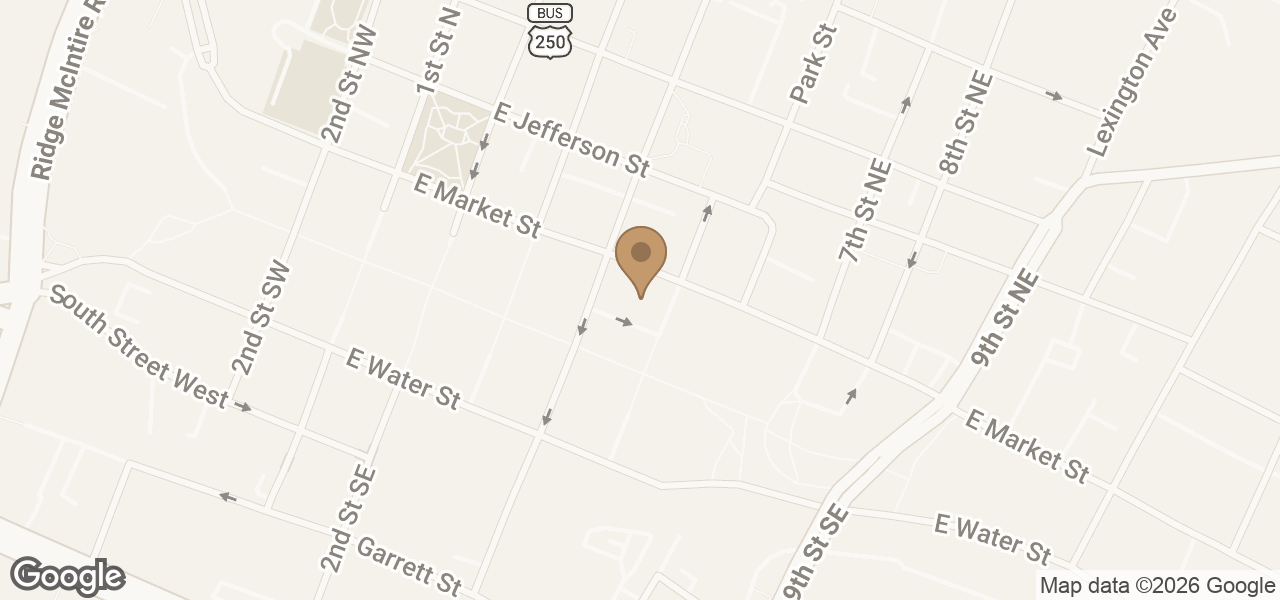
Address: 408 E Market St # 202, Charlottesville, VA 22902 (Get directions)
Website: petrichorwealth.com/
LinkedIn: Petrichor Wealth Management on LinkedIn
Google: Petrichor Wealth Management on Google
All services: View all Petrichor Wealth Management services →
| Mon | 8:00 AM – 5:00 PM |
| Tue | 8:00 AM – 5:00 PM |
| Wed | 8:00 AM – 5:00 PM |
| Thu | 8:00 AM – 5:00 PM |
| Fri | 8:00 AM – 5:00 PM |
| Sat | Closed |
| Sun | Closed |